 (682) 297 2200
Freight Rates for the end of 2024: What to Expect for Dry Van, Flatbed, Step Deck, and More
The trucking industry in 2023 took a big change. That would mean companies were able to move cargo for 20–30 percent less than before. Many in the industry are wondering what the next months of 2024 hold for the big drop in freight rates.
To know what changes the rates we need to look closer. We have to look and see how they impact different types of freight; dry van, flatbed and step deck. To help shippers and carriers prepare for the changing trucking world, knowing what the current trends and forecasts are helps to plan better.

Key Takeaways
Flatbed truck rates range from $3.14 per mile, or less, depending on the area.
freight rates depend on factors, including distance, shipment weight and density, freight classification and truck type.
To offer good service, to remain competitive and still make a profit, trucking companies must accommodate both.
In order to give accurate pricing, one needs to understand terms in the industry that includes consignor, consignee, and bill of lading.
Industry response to low demand, depressed rates and high operating expenses will shape freight rates 2024.
Current Freight Rate Trends Overview
With the freight rate scene changing so much this past year (going into 2024) we're close to the end, as it does. Truckload spot rates increased 3.0% from the prior year during the second quarter, according to the latest data. That is considerably higher than the previous quarter’s -3.3% drop. Rates on truckload contracts also went up, albeit just -2.7% year over year, up from the first quarter when they grew -5.3%.
Factors to Consider in Freight Rates
There are several reasons leading to the fact that the freight shipping rates are increasing. The inventory to sales ratio has slightly come back to a normal level of 1.37 in May 2024. That would suggest soon they start restocking. Industrial production at 0.4% year over year has stabilized; imports have risen 5.3 % year over year and imports have risen 1.4% year over year. And these trends are good for freight demand..
Trucking Costs and their Impact from Fuel Prices
Higher freight rates won’t matter if trucking companies can’t overcome costs. If we make a freight market analysis Fuel prices, insurance, new truck prices and maintenance have all risen. And, it makes trucking companies' profit margins even tighter. With these rising costs now carriers must manage their operations carefully and optimize routes, find ways to do away with these rising costs.
Statistic | Value |
Q2 truckload spot rates Y/Y | 3.0% |
Q2 truckload contract rates Y/Y | -2.7% |
Inventory-to-sales ratio (May 2024) | 1.37 |
Imports Y/Y | 5.3% |
Industrial production Y/Y | 0.4% |
"A combination of factors – including a restoration of the inventory to sales ratio, now at 1.37 in May 2024, suggesting a capacity for restocking in the near term – may have contributed to the recovery of freight rates."
A Breakdown of Freight Rates by Truck Type
Rates vary by truck type. For carriers and shippers, this is important. We'll explore the big rate differences for dry vans, flatbeds and more.
Dry Van Freight Rates
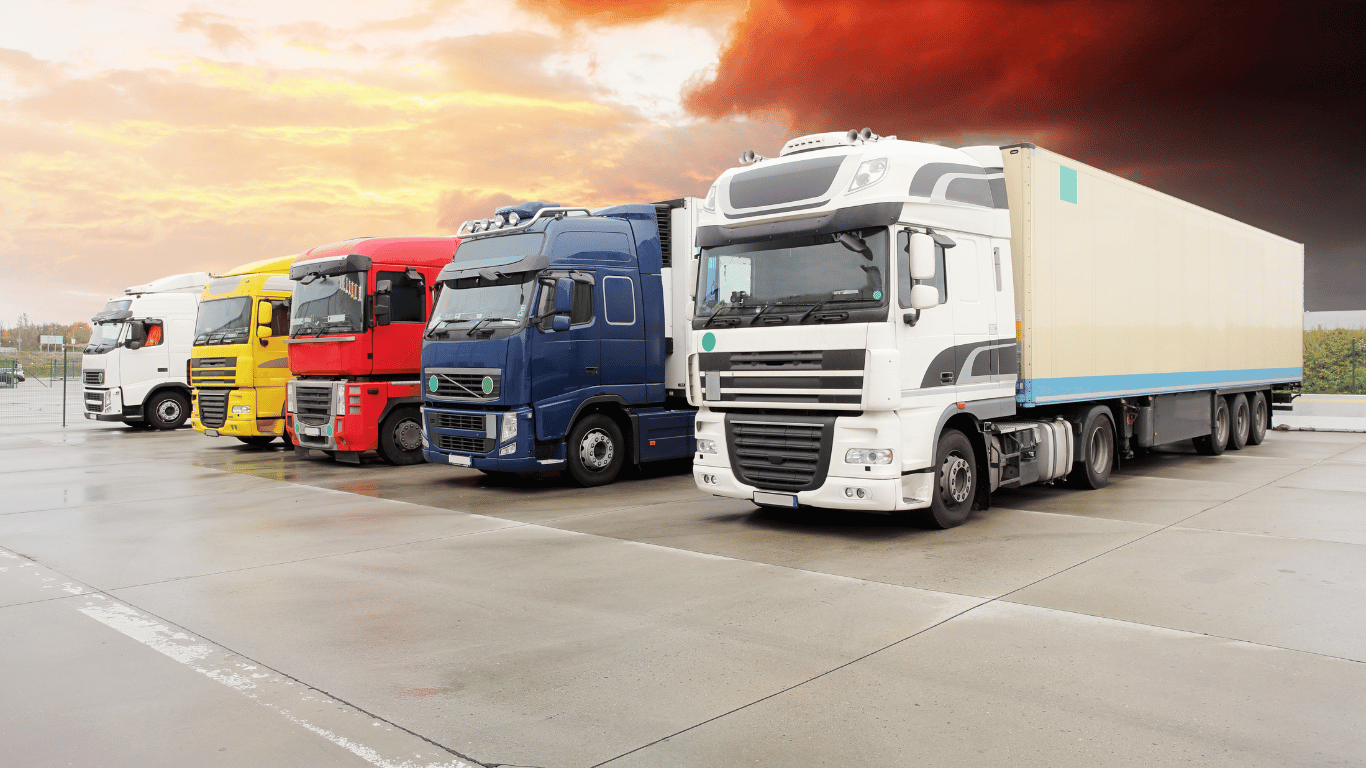
Dry van or Semi trucks have enclosed trailers. They are the most common type for truckload freight.Being able to carry many types of cargo makes for a top choice with shippers.
Semi truck Freight rate at about $2.50 per mile on average. Fees and rates can vary with fuel prices, demand and time of year for dry van rates.
Flatbed Freight Rates
They are perfect for large or otherwise odd shaped loads. They are open design so they can handle various kinds of freight. In most cases flatbed freight rates are much higher, usually over $3.00 per mile.
This higher rate is because you require special equipment and handling. But not as common as Dry Vans, they are very useful for certain loads.
But there's more to freight rates than just dry vans and flatbeds. Box trucks, hotshots , and other specialized vehicles also have their own rates. Knowing this information helps logistics experts choose better and save money.

"Staying on top of the latest Logistics trends and
freight rate trends
is essential for anyone involved in the transportation industry. It allows us to make more strategic decisions and stay competitive in the market."
The freight world is messy and rates can vary quickly. Experts suggest that you need to be flexible and understand what affects rates. Carriers and shippers can stay ahead of the game (and in profit) with the changing logistics scene by staying ahead and being proactive.
How the Freight Rates are looking for trucker towards the end of 2024
Near the end of 2024, truckers have a mixed freight rate outlook. Economic woes and a potential recession could lead no one wanting to call transport services. However, the supply of transport services could drop as more capacity leaves the market.
This change in supply and demand may stabilize the rates. However, Carriers will continue to have high operating costs.
Shippers will welcome the low freight rates. But carriers must find new ways to make money and run their operations efficiently. This is certain in these tough times.
Factors Affecting Freight Rates
Several key factors will shape freight rates by the end of 2024:
Economic factors, such as what consumer spending patterns and what manufacturing activity is doing regarding ongoing freight demand.
Transportation capacity availability as carriers make adjustment across their fleet to match market conditions.
The ongoing volatility of fuel prices, which determines trucking costs directly.
Seasonal cargo volumes (notably holiday seasons).
Freight Rates by Truck Type
Trucking Freight costs for different truck types will vary in the latter half of 2024:
Truck Type | Freight Rate Outlook |
Dry Van | Rates may stabilize after the holiday rush, with more affordable options as drivers focus on known routes and regions. |
Reefer | Demand for temperature-controlled transportation will likely remain consistent, with food and beverage companies absorbing most capacity. |
Flatbed | Acceleration in freight movement is expected as preparation for the construction season begins, with frameworks and contracts in place for upcoming projects. |
Over-dimensional | Freight transportation may face challenges due to winter conditions, limited daylight hours, and increased transit times, requiring careful planning and coordination. |
Freight rates for truckers in the end of 2024 are complex. There are pros and cons. The carriers have to be careful for smooth operations, optimize their operations as well as adapt to the changing market conditions. Without this they might not survive.
Seasonality and Its Effects on Freight Demand
There is a lot of up and down to the freight market throughout the year. Most often, these changes occur at the end of fiscal quarters and during holidays. In 2023, however, these usual peaks weren't so large. Looking into 2024, the freight demand might still be steady as spending habits and the economy are hard to predict.
About 5 percent of East coast volumes have moved to West Coast shippers to avoid risks. A 10–15% jump in volumes is also predicted for September at the Los Angeles/Long Beach port. Outlined is a 20% increase in volumes at US West Coast ports relative to 2023. Changes like the ones above depict the ever changing freight market.
Since August 15, 2024, the Neopanamax locks now limit vessels to a maximum authorized draft of 15.24 meters (50 feet) TFW. It could influence big ships and cargo. It has also cost global trade about 6–9% capacity because vessels have been diverted around the Cape of Good Hope rather than through the Suez Canal. This has far reaching consequences on the freight markets.
To monitor the freight demand, truckload freight rates and freight market trends as the industry goes through these changes, it's important for carriers and shippers to keep a close eye on all of this. It allows them to make smart choices and run their businesses to the best possible effect.
"The freight market has become increasingly dynamic, with shifting patterns of demand and supply that require close attention and agile response from industry players."
Rate Fluctuations Predictions For Late 2024
By the end of 2024, freight market will get some uncertain times, with rate volatility. A key spot rate index, the Coyote Curve has entered into inflationary territory. However, freight rates, all-in, have held steady in the past four quarters.
Economic Factors Driving Rate Changes
In late 2024, a number of economic indicators will determine freight demand and change rates. Some of these include consumer spending, industrial production, imports and inventory levels. These will be watched very closely by carriers who strategize.
There is a projection by the National Retail Federation that monthly inbound cargo in 2024 will exceed last year's numbers. They claim that for several months to come, volumes will exceed 2 million TEUs.
Inflation fears have led to a tumble in consumer confidence. Retailers are loading up on more goods for holiday shopping.
Like June 2023, the inflation rate for June 2024 was 2.974%. And a far cry from the 9.06% peak in June 2022.
Spot rate (excluding fuel surcharges) increased by 2.8 percent in June to $1.75, above the national average. It is the second month of increase.
Retail orders are up: department stores, electronics, grocery stores, apparel retailers, and discount retailers all registered year over year growth.
What freight rate changes will be dependent on these economic factors within the last months of 2024. With the changing freight market landscape, carriers will try to navigate.
Strategies for Carriers to Maximize Revenue
Trucking companies struggle with on going cost pressures and demand uncertainty. In 2024, they need to have various tactics to increase their revenue. The one key method is optimizing their routes and loads in order to work more efficiently and reduce costs.
Optimizing Routes and Loads
Advanced route optimization software and data can be used by carriers, in order to find the best route. It conserves empty miles and fuel. It also allows them to carry more freight, and such freight is more profitable.
Significant efforts are also given to load optimization technique. They help us use equipment and resources better. It encompasses: load consolidation, back haul management, and multi stop routing. These will increase productivity and profits of the fleets.
There are route optimization software that reduces empty miles and thus, find the most efficient routes to reduce the miles.
So that we can fill trailers more and waste less space by applying load consolidation strategies.
Get return loads and offload your assets more by better implementing backhaul management
Makes multi-stop routing more efficient through optimizing deliveries by making them smother and increasing loads per trip.
Carrier revenue optimization can be maximized through these trucking strategies. This improves their financial health, despite industry hurdles.
"Carriers are going to have to optimize routes and loads if they want to maximize revenue in 2024. They can leverage data driven and advanced technology to improve efficiency, reduce costs and thereby improve the bottom line."
Trucking Industry Forecast for 2025
The opportunities and challenges facing the trucking industry will both be apparent ahead by 2025. However, freight rates are forecast to be volatile, but a balanced supply and demand could smooth out the market. They will be required to handle high costs, labor shortages, and the danger of an economic recession.
Projected Rate Trends
Similar path for freight rates, and at slightly higher levels, according to our assessment for the second half of 2023. Contract rates rose in Q3 2023, from -13.9% Q2 2023 to -11.1% YoY. Spot rates are rising from a low of -9.9% y/y in Q3 2023. They expect long term contract rates to return to normal but first half capacity will drop.
Potential Challenges and Opportunities
By 2025 we could see high costs, labor shortages, and even an economic recession across the trucking industry. However, with new technology and the behavior of the consumers, carriers can differentiate themselves to be successful. This could be the moment for innovative carriers to thrive.
A surge in containerized imports could threaten the West Coast and Southern California. In 2025, poor trucking conditions may result in more driver exits and more disruption.
But a balanced supply and demand could dampen out freight rates. Other new FMCSA rules affecting brokers and freight forwarders include broker/freight forwarder financial failure or insolvency.
The year 2025 is shaping up as both a challenge and an opportunity for the trucking industry, in summary. Future will be about carriers that adapt, optimize and are successful at seizing change.
Conclusion
With unknowns throughout the freight rate scene next year looking ahead to the end of 2024, hard work awaits. Low rates are looming for shippers, but carriers need to get more efficient to survive. Times are going to be hard on trucking, but the ones that adjust and find other opportunities will survive.
The market will become better by 2024, carriers and 3PLs think. Shipments took a real nose dive in October, says Cass Information Systems. While Landstar System says the market is softer, it doesn't believe there will be a peak in the fourth quarter. But there are signs of improvement, such as more contract loads for Werner Enterprises and record intermodal volumes for J.B. Hunt Transport Services.
Understanding when the downturn will end depends on the industry watching GDP growth, consumption spending and import/export numbers. And part of this also means getting used to more fuel price swings; having new rules around fuel mixing, around fuel quality, biodiversity, and finding qualified workers. Within this, the freight and transportation sector can actually come out stronger than ever if we are quick to adapt and seize new opportunities.
FAQ
What factors determine freight truck rates?
Many factors influence freight truck rates. There are several of these factors that include the distance, the shipment's weight and how dense it is, the classification and type of truck used.
What is the average hotshot truck rate?
Hotshot rates are $2.4 per mile, on average. Rates can also change depending where you are.
How have freight rates performed in 2023?
During 2023, freight rates have continued to fall. That was because people are spending money differently. Less demand for freight meant more trucks were available, and trucking companies were paying more.
What types of freight trucks are there, and how do their rates differ?
Freight trucks come in many varieties. Refrigerated trucks can keep good cool and flatbeds have wide loads. Average costs usually go for dry van trucks. Flatbeds tend to have more expensive because their flatbeds can haul a number of loads.
How are freight rates expected to perform in the latter half of 2024?
Freight rates in second half 2024 might be mixed. Economic worry and perhaps a recession could keep demand low. However, more trucks are exiting the market, so there may be less capacity. That could keep rates stable, but carriers will still be saddled with very high costs.
How has seasonality impacted freight demand in 2023?
Freight demand has always been seasonable and peaks end of quarters and holidays. In 2023, however, these peaks were about normal. Seasonality remains uncertain, reliant on our spending and the economy’s future.
What strategies can carriers employ to maximize revenue in 2024?
In 2024, trucking companies will have to have smart strategies in order to make more money. They can actual savings by negotiating better rates and cutting costs at a vastly reduced expense.
What are the key challenges and opportunities for the trucking industry forecast in 2025?
In 2025, the trucking industry has its challenges and opportunities. However, it’s likely rates will remain volatile, but a better balance between supply and demand could make for a more level playing field. Even if carriers come through this with their skin intact, they will still have to pay high transportation costs and will continue to struggle to hire employees and face economic risks. On the other hand, they can also find a way in new tech and the way people shop.